
How a Cesium-137 Teletherapy Source Left Behind in Goiânia Contaminated a City
A discarded cesium-137 radiotherapy unit left in an abandoned Brazilian clinic ended up in a scrapyard and in homes. The IAEA's reconstruction separates radioactive material present, contamination of places, and actual exposure of people.
Significance 5/10: A forgotten cesium source became citywide contamination, and the IAEA's reconstruction separates presence, contamination and dose.
Coverage we found: 1 trade outlet, 1 journal commentary, no mainstream news in the past five years (searched October 20, 2026).
How we scored this
- Strength of evidenceThe account rests on the IAEA's 1988 report and its 1998 TECDOC-1009 follow-up, which are primary official records of the event.
- Effect on practice or understandingIt informs the accepted account by separating material present, area contaminated and person exposed, but it doesn't change any practice.
- ReachThe accident was in one city. The article counts 85 significantly contaminated houses, 41 evacuated and about 550 cleanup workers.
- StakesFour people died and 28 had radiation burns, but the article is a retrospective, so the consequences are indirect for readers today.
- SurpriseThe accident is well known, and the article retells the established IAEA chronology.
Coverage found
- EBSCO Research Starters (Radioactive Powder Injures Hundreds of Brazilians) other
- EBSCO Research Starters (Brazilian radioactive powder release) other
- Wikipedia other
- PubMed (journal commentary, "The Goiânia incident, the semiotics of danger, and the next 10,000 years") journal commentary
- Argon Electronics trade press
- Medbound Times other
- Britannica other
- Medium other
Only news, trade and journal coverage is counted. Press releases and other sources, such as reference sites, blogs, social posts and stock-news reprints, are listed but not counted. Searches miss things: tell us about coverage we missed. How the Unread Index works.
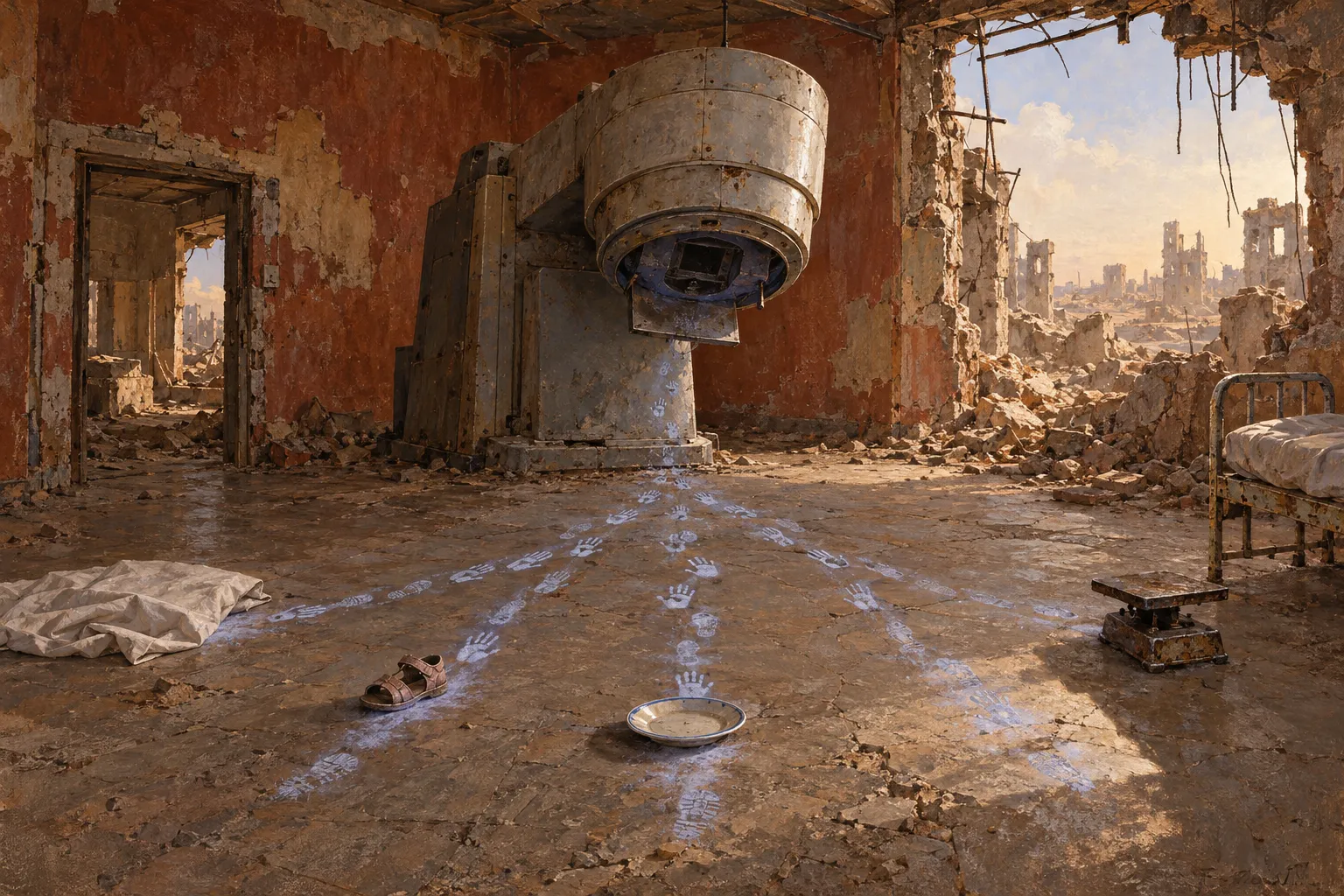
On the morning of September 29, 1987, a medical physicist in Goiânia, Brazil, was contacted about something unusual. His arrival was delayed because he doubted the readings of his first radiation monitor. The object he examined was, in the words of the International Atomic Energy Agency (IAEA), “a metallic assembly” which had been brought inside a bag by a woman and a man. That afternoon, a physicist of Goiânia notified Brazil’s national nuclear energy commission (CNEN) about a serious radiological accident.
The assembly had come out of a radiotherapy machine 16 days earlier. By the time the physicist arrived, its contents had been broken open and passed from hand to hand. Those contents were cesium-137 with an activity of 50.9 TBq (1375 Ci), in the form of cesium chloride salt, which the IAEA described as highly soluble and readily dispersible.
The story matters because of the route the cesium took. A sealed source designed to aim a beam at tumors inside a clinic ended up in a scrapyard, then in neighbors’ homes, then on the skin and in the bodies of the people who visited. Four of the casualties ultimately died, and 28 people suffered radiation burns. The IAEA’s reconstruction of where the material went, and who received what dose, separates three things that are easy to blur: radioactive material being present, an area being contaminated, and a person actually being exposed.
The Cesium Unit Left Behind at the Instituto Goiano de Radioterapia
The source belonged to the Instituto Goiano de Radioterapia, a private radiotherapy clinic. According to RT Medical Systems, the institute ceased operations in 1985 and relocated. When it moved, the IAEA wrote, it took a cobalt-60 teletherapy unit with it and left a cesium-137 teletherapy unit in place without notifying the licensing authority. The old premises were then partly demolished, and the abandoned unit became, in the report’s phrase, “totally insecure.”
A teletherapy source is a sealed source. The radioactive material sits in a capsule inside heavy shielding, and the machine opens a shutter to direct a beam at the patient. As long as the capsule stays intact, the cesium stays where it is.
The chemistry made the capsule’s integrity so important. Cesium chloride dissolves easily in water and binds strongly to soil and concrete. A breached capsule of soluble powder doesn’t stay in one place. It travels on hands, clothes, and shoes.
How a Teletherapy Source Reached a Scrapyard
On September 13, 1987, the shielded source was removed from its housing in the teletherapy machine. Both men involved began vomiting that same day.
By September 18, the source assembly had been broken out of its protective shielding and sold to a scrap metal dealer. Veneer magazine’s timeline says one of the men punctured the 1 mm thick window of the source capsule with a screwdriver. On September 21, the already damaged capsule was broken open.
The junkyard owner noticed that it glowed blue in the dark, and friends and relatives came to see it. People got sick, and physicians first suspected a tropical disease.
Eight days passed between the full opening of the capsule and the physicist’s measurement. During that time the material was shown around, carried home, and shared.
What Cesium-137 Does Outside and Inside the Body
Cesium-137 has a half-life of 30.17 years. It decays by beta emission to the barium isotope Ba-137m, with a half-life of 2.6 minutes, and the Ba-137m emits gamma radiation of moderate energy. So a source like this is both a penetrating external hazard and a beta-emitting internal one.
The people of Goiânia received both external and internal exposure. External exposure came from being near the material. Internal exposure meant the cesium was inside them. Cesium taken into the body spreads through soft tissue, especially muscle, so internal contamination acts as a distributed source rather than a spot that can be washed off.
At the house where the capsule was breached, dose rates at the soil surface reached 1.5 Sv/h. That figure is a reading at the surface of contaminated soil, not the dose any person received.
Tracing the Cesium Through Houses, Water, and Bodies
The cleanup was an exercise in accounting. According to RT Medical Systems, 85 houses had significant contamination, 41 were evacuated, and 7 were demolished, with about 550 workers taking part. Between October 25 and December 19, 1987, 275 truckloads went to a temporary waste store. The cleanup produced about 4,600 cubic yards (3,500 m³) of waste.
The best estimate of total recovered radioactivity, including material at the Marcílio Dias Naval Hospital, was approximately 44 TBq (1,200 Ci), against the source’s original 50.9 TBq.
Water shows the difference between presence and exposure. According to RT Medical Systems, treated drinking water and upstream reservoirs stayed below the detection limit of 1 Bq/L. Across 30 groundwater wells, the highest concentration was 30 Bq/L, found in a disused well.
For the people, the question was dose, and it had to be reconstructed after the fact. Investigators used whole-body counters, urine and fecal bioassays, and chromosome analysis (cytogenetics). Prussian blue was given to speed cesium out of the body.
The Ten-Year Follow-Up From the IAEA and CNEN
The IAEA published its report in September 1988. In June 1998, the agency’s TECDOC-1009 gave the ten-year follow-up, including six years of in vitro bioassay and a 7.5-year cytogenetic follow-up. CNEN and the IAEA also held a conference titled “Goiania, Ten Years Later.”
Not every consequence could be measured in becquerels. A CNEN paper reported discrimination against victims as a major psychological issue.
Readers can compare Goiânia with the lost quarry capsule that ended up inside an apartment wall and the cesium cloud that crossed Europe before anyone named its source.
About the sources: The account rests mainly on the IAEA’s 1988 report, The Radiological Accident in Goiânia, and on later IAEA publications. Summaries by RT Medical Systems, Johnston’s Archive, and Veneer magazine follow the same IAEA chronology.
Edited by a healthcare imaging professional with more than 25 years of experience in the field. How we report and edit.
Read next