
The Nuclear Files
The Lost Quarry Capsule That Ended Up Inside an Apartment Wall
A tiny cesium-137 capsule lost in a quarry ended up inside an apartment wall in Kramatorsk, Ukraine. Residents fell ill and died for years, and accounts still disagree on how many deaths and illnesses the source caused.
Significance 2/10: A lost cesium source reached an apartment wall, and radiation-linked deaths were blamed on heredity for years.
Coverage we found: 3 mainstream news outlets in the past five years (searched October 14, 2026).
How we scored this
- Strength of evidenceThe article rests on Wikipedia, energia-nuclear.net and NEWS.ru. It draws on no primary Soviet or Ukrainian document, and its own source note says many English retellings copy Wikipedia.
- Effect on practice or understandingThe article reports no change to guidelines or practice, and it gives no dose data tying any death to the capsule.
- ReachOne capsule in one apartment block affected a few families, with 4 deaths and 17 others reported.
- StakesThe case shows an indirect safety consequence, a sealed source leaving control through the supply chain. The article gives no dose values or modern cost or safety consequences.
- SurpriseIt adds meaningfully by showing deaths blamed on heredity until a single radiation measurement. Lost-source cases like Algeciras are already known.
Coverage found
- vchaspik.ua mainstream news
- 24tv.ua (interesting.24tv.ua) mainstream news
- Techinsider.ru mainstream news
- Russian7.ru other
- rad-lab.ru (Radiation Control Laboratory) other
- Shnyagi.net other
- OrangeSmile other
- Scary Carrie's other, 2023-01-27
- Loquis other
- Aroundus other
- X (@atomicarchive) other
Only news, trade and journal coverage is counted. Press releases and other sources, such as reference sites, blogs, social posts and stock-news reprints, are listed but not counted. Searches miss things: tell us about coverage we missed. How the Unread Index works.
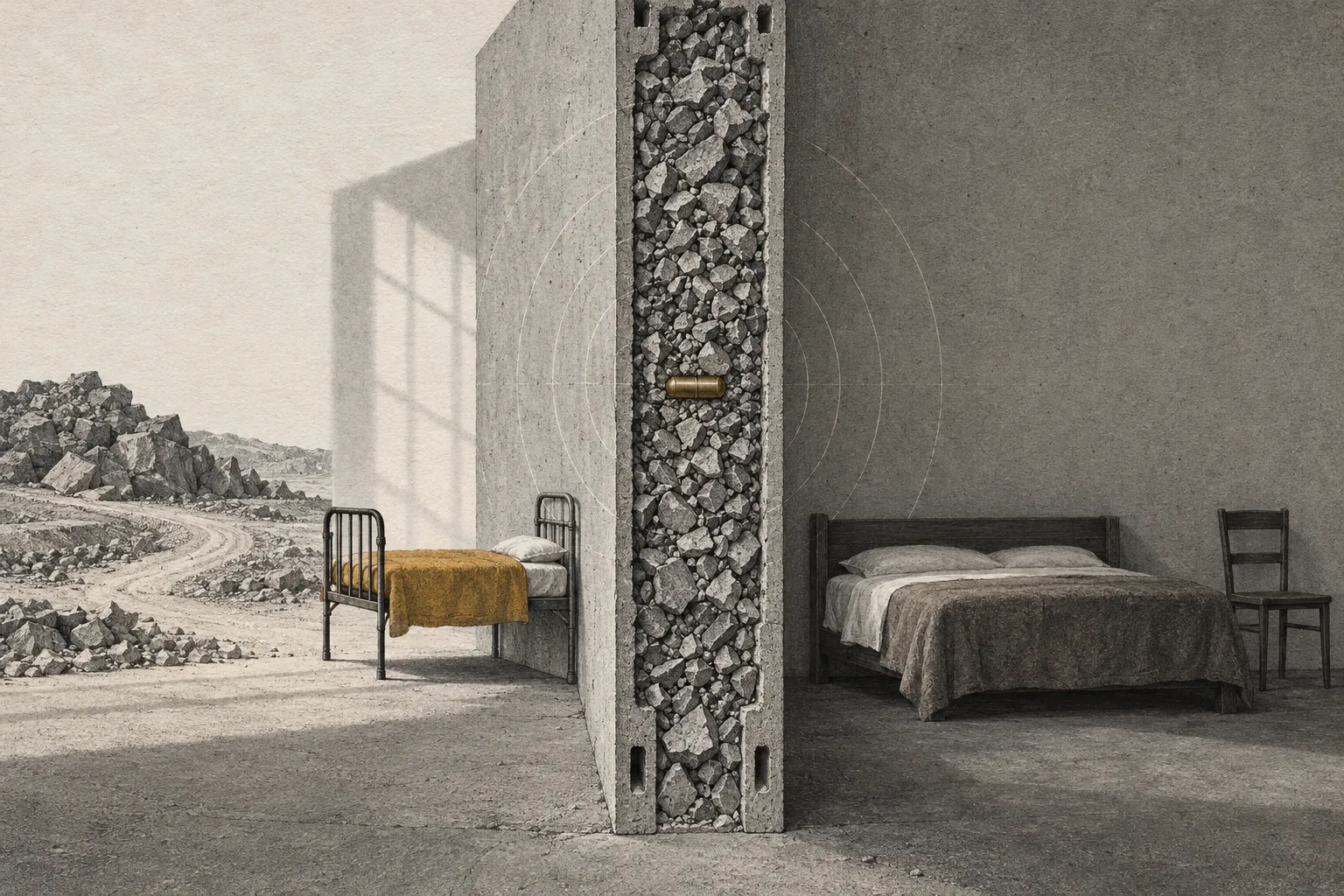
In 1989, in the city of Kramatorsk in Soviet Ukraine, workers cut a section out of a concrete wall in building 7 on what was then Hvardiitsiv Kantemyrivtsiv Street, now Marii Pryimachenko Street. The wall lay between apartments 85 and 52. Inside the concrete was a cesium-137 capsule from an industrial level gauge, and the wall’s surface gamma exposure rate was reported as 1800 R/year.
The capsule had been there since the building went up. In the years that followed, members of two families in apartment 85 fell ill and died.
The case matters because of the route the source took. A sealed source meant for a quarry’s machinery left regulated control through an ordinary supply chain of crushed stone, concrete and prefabricated housing panels, and ended up in an apartment wall. A child’s bed was positioned right next to it.
A gauge, a quarry and a one-week search
The capsule began as part of a radiation level gauge. In the late 1970s it was lost in the Karansky quarry, and the search ended after a week without success.
Cesium-137 is used in level and thickness gauges. According to energia-nuclear.net, the source was of the IGI-Ts-4 type, with an activity of 5.2 × 10¹⁰ Bq, used in a crushed-stone level meter. NEWS.ru gives the capsule’s size as 4 × 8 mm.
Crushed stone from the quarry went into concrete, and the concrete went into a wall panel. The building was commissioned in 1980, and the apartment was fully occupied that year.
What cesium-137 does from inside a wall
Cesium-137 is a beta and gamma emitter with a half-life of 30.17 years, according to the U.S. Environmental Protection Agency (EPA). Over the roughly nine years the capsule sat in the occupied building, its activity fell by only about a fifth.
The decay happens in two steps. Cesium-137 emits a beta particle and becomes barium-137m, with a half-life of 2.6 minutes, which then emits gamma radiation of moderate energy. NEWS.ru gives that energy as 0.6617 MeV.
The exposure route was external. The EPA notes that people can be exposed externally to gamma radiation from cesium-137’s decay products, and according to NEWS.ru the capsule remained intact and released no dust.
The reported 1800 R/year is an exposure rate at the wall surface. It describes the radiation field at that point, not a dose to any resident.
Deaths attributed to heredity
In the summer of 1981, an 18-year-old girl died. Her 16-year-old brother died the following year, and so did their mother, though the order of those two deaths is unclear.
Another family lived in the apartment later. In 1987 their teenage son died, and his younger brother became seriously ill. Wikipedia’s list of orphan source incidents says both sons were diagnosed with leukemia and died within two years; energia-nuclear.net records only the older son’s death.
Doctors, unable to identify the root cause, attributed the diagnoses to poor heredity.
One request for a measurement
In 1989 the father of the second family went to the local sanitary and epidemiological station and asked for the radiation background to be checked. A health physicist then found dangerous levels.
According to NEWS.ru, the highest readings were in the children’s room, the neighboring apartment and the floor above.
The section of wall was cut out and sent to the Institute for Nuclear Research in Kyiv, where the capsule was removed, identified by its serial number and disposed of.
By its factory number the source was traced to its owner, an enterprise that produced crushed stone, according to the Russian real estate site superrielt.ru.
Conflicting reports of deaths and disability
Reported health outcomes vary. Energia-nuclear.net gives between two and six deaths, and NEWS.ru gives four to six. Wikipedia, citing a 2019 book by Obodovskiy, says four residents died and 17 more received varying doses of radiation; Russian-language accounts describe those 17 as having become disabled. The cited accounts give no dose values and do not link individual illnesses to measured doses, so they do not establish that the capsule caused each death or disability.
Kramatorsk is one of several cases in which a lost cesium-137 source moved through an industrial stream. In 1998 another went into a steel mill’s furnace, producing a cesium cloud that crossed Europe before anyone named its source.
After the panel was removed, the background level returned to natural levels, according to superrielt.ru. The building still stands, according to NEWS.ru.
About the sources: This account draws on Wikipedia’s entry on the Kramatorsk radiological accident, a 2021 article on energia-nuclear.net, and the Russian-language outlet NEWS.ru. Wikipedia’s entry cites a 2005 article by Makarovska in Security and Nonproliferation and Obodovskiy’s 2019 Elsevier book. Many English-language retellings repeat Wikipedia’s text and are not independent accounts.
Edited by a healthcare imaging professional with more than 25 years of experience in the field. How we report and edit.
Read next